Long ago, my hero John Muir, was asked by a prominent individual visiting Yosemite, for suggestions about how to spend a single day in that park. I suspect it was with scorn, when Muir later shared in writing his advice to someone so “time-poor” as to only have one day to see Yosemite.
 |
| Old Faithful Geyser in winter |
It is the same with Yellowstone. We were excited to have arranged for a snow coach tour on one winter day in our nation’s first national park. But we knew that one day was completely inadequate to experience Yellowstone in winter - we were keenly aware of being what Muir would have called “time-poor.”
Yellowstone is a vast and magnificent area, a true wonderland in winter, and it would take at least a few days to reach all of the areas accessible via snow coach, even just to glimpse them briefly. To experience the back country would require significant time and travel on skis or snowshoes. Yellowstone encompasses mountains, canyons, valleys, rivers, waterfalls, geysers, and unique thermal features. It offers awe-inspiring scenery and some of the most fascinating wildlife viewing opportunities anywhere.
 |
| Gibbon River at dawn |
Weather conditions vary greatly, can be unpredictable, and can determine and shape a winter experience in Yellowstone. Winter temperatures can be 30 below zero or 30 above. Conditions can range from blizzard, with a couple of feet of snowfall in a matter of hours, to fog and mist, to a crisp and sparkly white landscape with steam from geysers and thermal features rising against a brilliant blue sky.
A visitor might see a lovely sunrise or sunset, a crystal clear winter vista, or be enveloped in a white-out under gloomy grey skies. Accumulated snowfall might be a few inches or a few feet. All these conditions affect views of the landscape and of the wildlife. Each day in Yellowstone is unique, and a visitor can be surprised by unexpected sights and experiences.

In winter, only the north entrance to Yellowstone is open to regular vehicles. Most of the park can be reached only by snow coach or snowmobile, and then only with a guide. This year, snowfall had been low so far, and the park had only opened to snow coaches and snowmobiles a week prior to our scheduled trip out of the west entrance at West Yellowstone.
The temperature read zero degrees when the six of us in our group met our snow coach at 7:00 AM. on January 4th in West Yellowstone, Montana. Winter days are short this far north, with the official time of sunrise about 8:00 am and sunset about 4:45 pm. We had been warned to be prepared for the possibility of temperatures of 20 below zero, so we were glad it was not colder.
 |
| Our group with the snow coach at the end of the day |
In the foggy, misty, morning cold, the vegetation and the woods along the road near the warmer river, as well as the animals we saw, were all covered in frost. A herd of more than a hundred bison, together with a handful of elk, grazed along the Madison River as we drove into the park, but it was so dark and foggy that photos weren’t possible.
We turned south on the route that would take us through geyser basins and towards Old Faithful, and the light of dawn could be seen in the sky, as we crossed the Gibbon River.
 |
| Elk in Firehole River in Yellowstone |
Then the fog and mist returned for at least another hour. The most interesting sighting of the morning was a group of female elk, with one calf, huddled together in the middle of the Firehole River. Immediately our guide said “there must be wolves around.” While another possibility is that they were seeking to feed on aquatic vegetation, we sensed that their behavior more likely reflected the presence of a predator.
 |
| Cow elk and one calf in Firehole River |
Apparently wolves generally don’t go in the water, so the elk retreat to mid-river as a defensive move when they sense the presence of their primary predator. These elk were tightly huddled together when we first saw them, and they were exceedingly alert, carefully peering in every direction as if to identify danger.
 |
| Frosty elk on winter morning |
 |
| Elk in snow near Firehole River |
One of the elk, who appeared to be the mother of the one calf in the group, was noticeably gaunt, with her ribs showing, and did not look strong. Her calf wanted to nurse but she kept turning away. We wondered if she would last through the long and harsh winter.
Near the group of elk was a group of five trumpeter swans. About 500 of this majestic and elegant bird live in the Greater Yellowstone Ecosystem, and they are joined by about 4,000 additional trumpeter swans from Canada over winter. However, less than ten swans actually live year-round in Yellowstone Park, and the National Park Service considers this bird the most imperiled in Yellowstone.
 |
| Trumpeter Swans on Firehole River on misty winter morning |
Coyotes are much more commonly seen than wolves, and we spotted our first coyote soon after leaving the elk and the swans.
 |
| Coyote in Yellowstone |
When we reached the Old Faithful geyser basin, the frost on the trees around the thermal features, still present in the crisp cold of late morning, was spectacular. Before long, the weather gave way to a sparkling afternoon during which the temperature climbed to the 30s, an especially moderate temperature for Yellowstone in winter.
 |
| Old Faithful on early January afternoon |
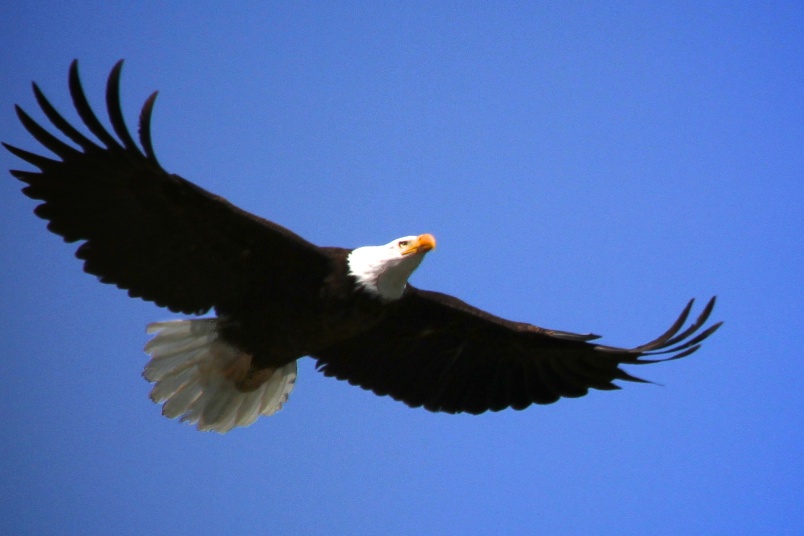
On our return drive to West Yellowstone, we saw a couple of bald eagles and two coyotes along the way, as well as the same herd of bison along the Madison River between Madison Junction and the Seven-Mile Bridge.
 |
| Coyote watching us |
 |
| Coyote in Yellowstone |
The sun went down over the ridge as we watched the bison.

We did not see the bobcat that had been sighted a few times recently near Seven Mile Bridge, nor the wolf that was reported a couple of weeks earlier in Biscuit Basin. We were not even near the magical Lamar Valley in the northeast corner of the park, which is the best place to observe packs of wolves. The animals we saw were the more commonly seen species. But it had been a wonderful day for Randy’s and my 15th anniversary. Along with our friends sharing the snow coach, we all wished for more time in Yellowstone and resolved to come back again in winter.