Please VISIT OUR WEBSITE

To order images, prints, or cards, click here

Friday, July 16, 2010

Yellowstone

Yellowstone is a sacred place to me, a place of immense natural beauty, awesome scenery, abundant and amazing wildlife, unique and wondrous geothermal features. 


Lower Yellowstone Falls

Bison grazing in Lamar Valley

Pond near Swan Lake
Ledge Geyser (l) & Black Growler Steam Vent - Norris
Each season offers special opportunities to observe wildlife, and by early to mid June, visitors can spot black and grizzly bears with their cubs, wolves with their pups, bison and elk with their calves, and pronghorn with their fawns. In the Madison River Valley, we enjoyed watching a herd of bison cows with their calves, as they walked along the river, several of the animals swimming back and forth across the water.
Bison with two calves

Bison mother and calf ford Madison River

Bull Bison calf

A pair of sandhill cranes were followed through the grass by their chick, who mimicked their every move.

Sandhill Cranes
Sandhill Crane with chick


Bighorn Ram


In the beautiful and wild Lamar Valley, in the undeveloped northeastern corner of the park, we saw hundreds of elk and bison, as well as a majestic bighorn ram, and two female pronghorns with their fawns.


Pronghorn females with fawns


Pronghorn nursing


Staying overnight in nearby Silver Gate, we were up well before dawn to join other wolf watchers with our rented high-power spotting scope, and were rewarded with the opportunity to watch the five adult wolves and four pups of the Silver Pack just as the sun rose.

The animals were much too far away for photographing the wolves, but from high on a sage-covered hillside on the north side of the valley, we watched the pups romp and play, and the adults lounge about, in the early morning sunlight. 
Later in the day we watched two of the three adults and two of the three pups of the newly-named Lamar Canyon Pack, near the location known to experienced wolf-watchers as the den of the former Slough Creek Pack, which the new group used this season to have their pups.


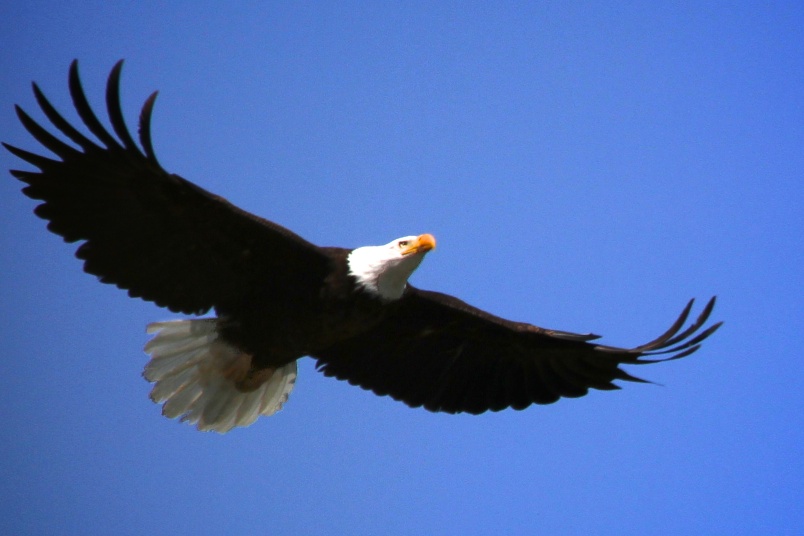
Bald Eagle with "chick" a few days before fledging
A highlight of our first visit to Yellowstone this season was watching a bald eagle nest, with one young bird who was testing his wings and flight skills just days before he fledged.
The adult eagles in flight were magnificent - more than worthy of being identified as our national symbol.
Bald Eagle adult


Firehole River, Midway Geyser Basin


On another visit to the park, we stopped along the Firehole River where it meandered through the Midway Geyser Basin.


A great blue heron in full breeding plumage preened on the opposite bank, in a colorful wildflower meadow of purple larskpur and other flowers. The fancy plumes are only present in breeding adults, and although I have watched great blue herons all over North America for more than thirty years, this was the best opportunity I have had to watch and photograph such a beauty.


Great Blue Heron in breeding plumage


Old Faithful Geyser

Old Faithful is the most famous geyser in the world, attracting tens of thousands of visitors annually to observe its regular eruptions which occur about every hour to 90 minutes and last from one-and-a-half  to five minutes.

Grand Prismatic Spring 


Grand Prismatic Spring is not far from Old Faithful, and is one of the largest and most colorful of the hot springs in the park. The color of the hot springs comes from microbes living in the hot water - and varies from blue through orange depending on the temperature.

Friday, July 9, 2010

Rancho Santa Ana Botanic Garden

Spring in southern California is magnificent for glorious weather and wildflowers. We are lucky to live near the Rancho Santa Ana Botanic Garden in Claremont, 86 acres which are home to the largest collection of native California plants anywhere.


Naturally, the Garden attracts many birds. The image below captures the pert Bewick's Wren.

One year a pair of owls nested and raised their young in a tree a few feet from one of the trails. This year a pair of Red-Shouldered Hawks nested above another trail.


The Garden also attracts many butterflies, among them the Pipevine Swallowtail.


This June, one of the research associates, "BugBob" Allen, a biology professor, botanist, entomologist and photographer, who teaches digital photography classes at the Garden, organized the Garden's first butterfly exhibit, a wonderful presentation of native plants and the butterflies that pollinate them.

Monarch

Pipevine Swallowtail

Chalcedon Checkerspot


June brought bright pinks to Fay's Wildflower Garden, replacing the oranges, yellows and blues of poppies and lupine a month earlier.

Tuesday, April 20, 2010

April in Joshua Tree National Park

Childhood memories of scrambling among piles of boulders in Joshua Tree, return whenever I visit this park. I have always marveled at the weird and unique Joshua Tree plants and the random-looking piles of granite, making me think of some other planet. Designated a national monument in 1936, it became a national park in 1994.

This park protects 800,000 acres of Colorado and Sonoran desert. I love seeing on the park website that from time to time certain areas of the park are closed to public use "due to wildlife activity." Isn't this part of why we have parks? To protect the wildlife?

On the approach to the park from the heavily populated Los Angeles Area, one drives past Palm Springs and Desert Hot Springs, from which there are gorgeous views of 10,834-foot Mt. San Jacinto.

During beautiful sunny days of a visit to Joshua Tree National Park in April, with temperatures in the 70s, snow-capped peaks of the San Gabriel Mountains were still visible from a corner of the park and from nearby Yucca Valley.


Red-Tailed Hawk

Visiting the park with a biology professor who specializes in reptiles, leads to identifying numerous lizards, including these:


Collared Lizard
Chuckwalla - note he's lost his tail!

We even spotted a mini desert tortoise - actually a baby - a miniature of the adult, but only about 3 inches in diameter.

The scenery is spectacular, and the rocks are popular among climbers.

Cactus bloom in the spring, the vibrant color of the blossoms a striking contrast to the forbidding spines of the cacuts.

An early morning walk at the Oasis of Mara - or anywhere else - is a great time for bird watching or photography.

This Gambel's Quail posed and sang for us.

The Phainopepla has a silhouette similar to the eastern Cardinal, but all black, with his striking crest.

Mourning Dove

Desert Cottontail

Wildflowers abound when conditions are right.

There are many hiking opportunities including a few that take the visitor to one of several oases in the park - such as the moderate 3-mile round-trip hike to the 49-Palms Oasis.

The hiker is rewarded by a lovely green oasis.


Wednesday, April 7, 2010

Spring Break in Santa Barbara

Cachuma Lake Recreation Area, about 15 miles inland from Santa Barbara, California, is a lovely county park. 


In spring, the hills around the lake are a lush green, deciduous oaks bursting with new growth. These coastal hills have abundant wildlife, including deer, wild turkey, and many bird species. 


We camped among oaks filled with acorn woodpeckers.


European Collared Doves were common, as were wild turkey, Western Bluebird, California Quail, Scrub Jay, European Starling, and the little Yellow-Rumped Warbler - which I have always thought is a much less dignified name for this cute bird than the former name, "Audubon's Warbler."


Along the coast, Gaviota State Park "takes its name from the Spanish word for seagull, given to the area by soldiers of the Portola Expedition who supposedly killed a seagull while camping here in 1769." A dramatic railroad trestle dominates the way to the beach, and a long pier attracts fishermen and even has a boat launch hoist. The pier is a great vantage point for view of birds and the ocean.


Wildflowers grace every hillside, the most showy flowers being the California Poppy, Lupine, and Mustard.


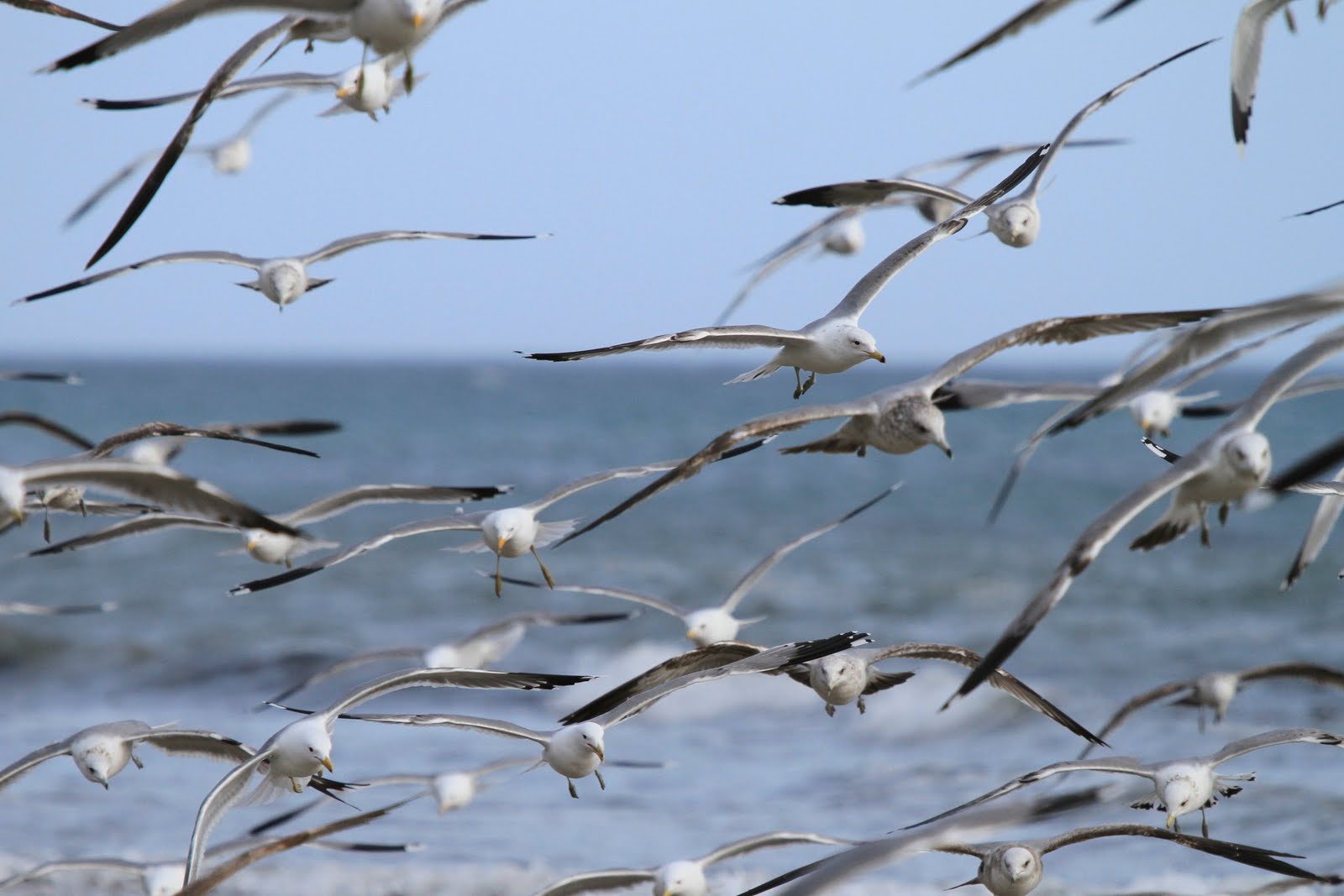
We delighted in walking along the beach among the gulls, and especially in watching Long Billed Curlews feed in the receding waves, flaunting the unlikely proportions of their long bills, then flying gracefully over the surf.


Refugio State Beach and El Capitan State Beach, also operated by the California State Parks system, offer more miles of beach and hiking trails, and more shorebirds. All of these three parks and beaches are within 20 miles of Santa Barbara, itself a charming seaside town.